











Hypertension, or commonly known as high blood pressure, is a common condition affecting millions of adults worldwide. It happens when the force of blood pushing against your artery walls stays consistently high throughout a period.
A single high reading does not mean you have hypertension. It is perfectly normal for your blood pressure to briefly jump during a stressful moment, a heavy workout, or even after a strong cup of coffee. Doctors only diagnose hypertension when your numbers remain persistently elevated across multiple check-ups, which is why routine monitoring is crucial.
There are usually no noticeable symptoms for Hypertension, thus this disease being labelled as a “silent killer”. If your blood pressure is severely elevated with a reading of ≥ 180/120 mm Hg, this constitutes a hypertensive emergency where immediate medical treatment is needed.
During hypertensive emergencies, these symptoms may start to manifest:
Severe, throbbing headaches
Chest pain or tightness
Shortness of breath or difficulty breathing
Sudden blurry vision or other changes in your eyesight
Dizziness or lightheadedness
Unexplained nosebleeds
Heart palpitations or an irregular heartbeat
Confusion or difficulty focusing
Swelling in your lower legs, feet, or ankles.
Blood Pressure | Systolic (mm/HG) Top Number | Condition (and/or) | Diastolic (mm/HG) Bottom Number |
Normal | > 120 | and | > 80 |
Elevated | 120 – 129 | and | > 80 |
Stage 1 Hypertension | 130 – 139 | Or | 80 – 89 |
Stage 2 Hypertension | 140 higher | Or | 90 higher |
Severe Hypertension / Hypertensive Emergency | Higher than 180 | And/or | Higher than 120 |
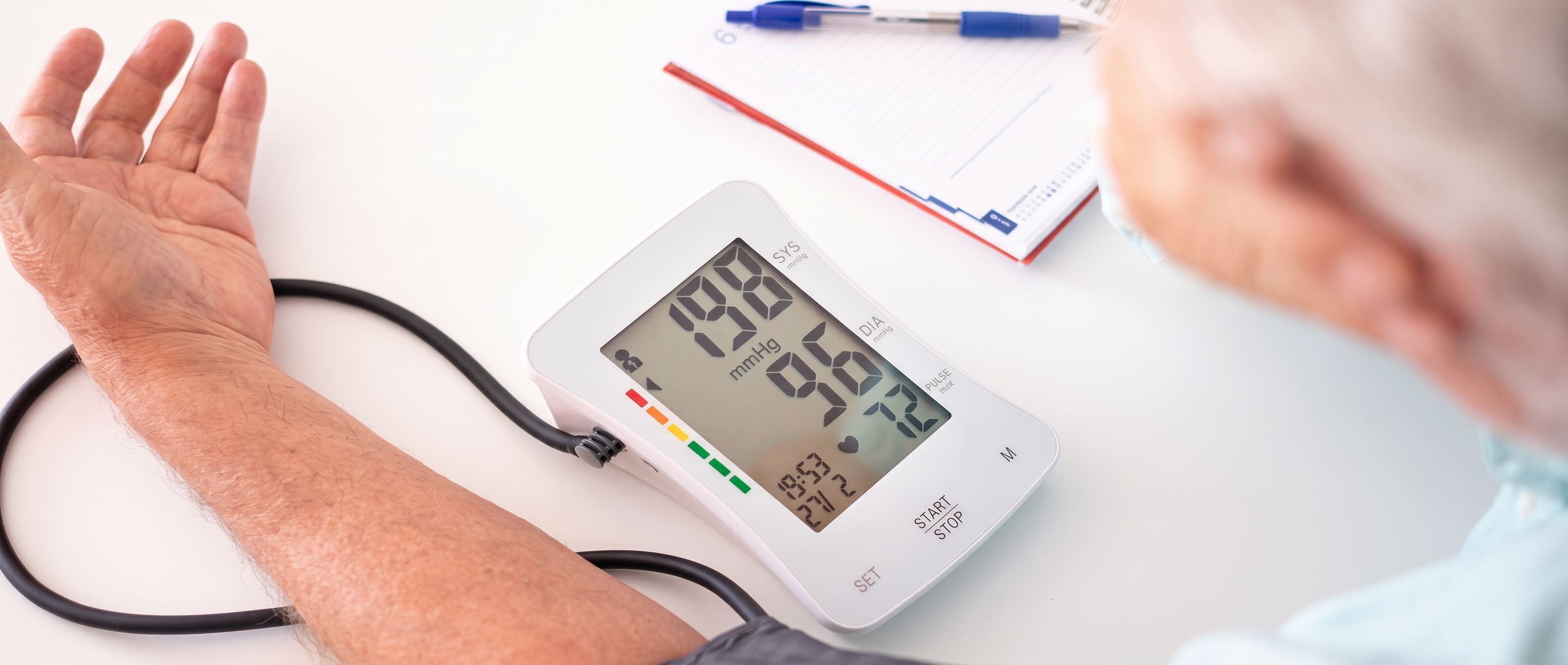
Your blood pressure reading has two numbers. The top number, systolic, tracks the pressure in your arteries each time your heart beats. The bottom number, diastolic, measures that same pressure while your heart rests between beats.
To check for your current blood pressure, you may use your own home blood pressure checker and compare your results with the table above. It is important to note that only a doctor can diagnose a patient with chronic hypertension. A single reading does not constitute a diagnosis.
Readings with condition “and” must meet the two criteria indicated in the table. Readings with “or” condition needs to satisfy just one condition to be classified (i.e. a reading of 120/89 is still considered as stage 1 hypertension).
If you have an elevated high blood pressure with no other symptoms, you may try to:
Loosen any tight clothing
Drink water. Dehydration may cause a spike in your blood pressure
Take slow deep breaths
Rest and avoid sudden movements
For those with prescription, take your medications
DO NOT TREAT SEVERE / HYPERTENSIVE EMERGENCIES AT HOME. CALL FOR IMMEDIATE MEDICAL ASSISTANCE OR BRING PATIENT IMMEDIATELY TO EMERGENCY DEPARTMENT.
ASIAN HOSPITAL EMERGENCY HOTLINE: +63288765755
If you have been putting off checking your blood pressure, or managing hypertension on your own, the Hypertension Clinic at Asian Hospital and Medical Center is here to change your approach to heart health. Asian Hospital’s Hypertension Clinic is a a specialized unit designed to give you total clarity and control over high blood pressure. It aims to guide you through precise diagnostic evaluations, personalized treatment navigation, and provide sufficient patient education on hypertension to help you achieve stable, healthy numbers, prevent serious long-term complications, and master a heart-healthy lifestyle.


