














Emergency Contact
For urgent assistance, call us at

Heart valve replacement saved a woman’s life at 81

Home | Patient & Visitors Guidelines | My Asian Story | Heart valve replacement saved a woman’s life at 81


Julia Bonaobra-Yap, 81 years old, had planned to enjoy a relaxing spa day. However, her day took a sudden turn when she experienced a severe allergy attack that caused her breathing difficulties. She was immediately taken to the emergency room, where she received first aid for her allergy symptoms. Unfortunately, her condition was so severe that she needed to be admitted to the Intensive Care Unit (ICU). Although she was eventually discharged and deemed fit, her relief was short-lived.
 
In March 2023, Julia experienced what appeared to be another allergy attack that made it difficult for her to breathe. However, this time, she also felt a weight on her chest that caused her to lose consciousness. She was immediately rushed to the same hospital as before, but her condition was more severe than the previous attack, and her heart stopped beating. Thankfully, the hospital staff
were able to revive her after six minutes, and she regained consciousness after a few hours. Although she was saved, doctors suspected that her symptoms were not just caused by an allergy attack. Julia was intubated while doctors conducted further tests, and they eventually discovered that the valve responsible for allowing the blood to exit the heart, was almost completely obstructed. They determined that the only way to save her life was to perform a Transcatheter Aortic Valve Replacement (TAVR) or Open-Heart Valve Replacement Surgery.

WHAT IS TAVR AND WHAT IS ITS ADVANTAGE OVER OPEN HEART SURGERY?
TAVR STANDS FOR TRANSCATHETER AORTIC VALVE REPLACEMENT. IT IS A MINIMALLY INVASIVE
SURGICAL PROCEDURE USED TO REPLACE A DAMAGED AORTIC VALVE IN THE HEART. TAVR IS A NEWER ALTERNATIVE TO TRADITIONAL OPEN-HEART SURGERY, WHICH INVOLVES MAKING A LARGE INCISION IN THE CHEST TO ACCESS THE HEART. TAVR IS GENERALLY CONSIDERED TO BE LESS INVASIVE THAN OPEN-HEART SURGERY AND CAN BE A VIABLE OPTION FOR PATIENTS WHO ARE AT HIGH OR INTERMEDIATE RISK FOR COMPLICATIONS WITH TRADITIONAL SURGERY.

Due to Julia’s age and health condition, Open Heart Surgery poses significant risks. Her frail body may not be able to handle the surgery, it may worsen other pre-existing conditions, and the longer recovery period may be too difficult to endure. Therefore, the family opted for TAVR as the most suitable alternative. However, during the pre-operation tests, it was discovered that Julia’s lungs were congested with fluid, which could further complicate her breathing.
 
At Asian Hospital and Medical Center, a multidisciplinary team was created to handle Julia’s case with Dr. Fabio Enrique Posas as the Head Interventional Cardiologist; Dr. Marc Louie Del Rosario, Interventional Cardiologist, Dr. Gilbert Florentino, Electrophysiologist; Dr. Margrette Ruth Bernardo, Nephrologist; Dr. Edwin Dimatatac, Infectious Disease Expert; Dr. Lenora Fernandez,
Pulmonologist; and Dr. Adrian Peter Desquitado, Thoracic and Cardiovascular Surgeon. This team of experts ensured that Julia would have the best intervention available with the least possible complication.
 
On April 15, 2023, Julia underwent a successful TAVR procedure performed by a team of experts at Asian Hospital. This gave Julia and her family renewed hope, as her heart valve, which had only a 0.4cm 2 opening, was replaced with a new one with a 1.5cm 2 opening. This allowed for regular blood flow and adequate supply, improving her overall health.
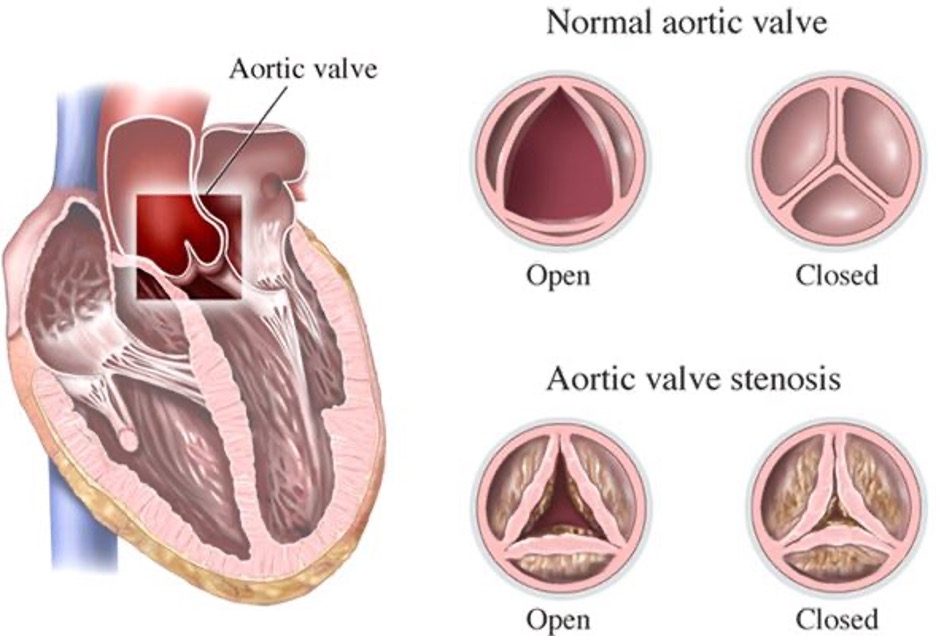
Image source: http://www.rwjbh.org/treatment-care/heart-and-vascular-care/diseases-conditions/heart-valve-disease/

Julia has been discharged from the hospital and is currently in good condition. There is no more difficulty in breathing. While still under Occupational Therapy, she can already eat on her own and can walk at least 10 steps with the help of a walker. She actively participates in her Cardiac Rehabilitation sessions. Furthermore, she remembers her doctors, including Dr. Posas, whom she found to be one of the most handsome doctors during her stay. Dubbed as “The Heart Plumber”, Dr. Posas is currently the Head of Structural Heart Disease and Endovascular Therapy at Asian Hospital and was bestowed the Order of Lapu-Lapu with the Rank of Kamagi in 2018 for contributing “significantly to an activity pursuant to a campaign or advocacy of the President.”

In addition to celebrating her second chance at life, Julia is also grateful to her entire medical team, including the nurses, for making her stay as comfortable as possible.


To know more about Structural Heart Disease, contact the Asian Cardiovascular Institute at (02) 8-771-9000 locals 5751 and 8250.

More Stories
Josephine Castaneda (Severe Degenerative Joint Disease, Right & Left)
When people started to notice that Josephine Castaneda’s walk was strange, and her knees’ shape had already become irregular, along with unbearable pain, she consulted with Orthopedic Specialists to learn about her condition. After seeking help from 3 specialists, her Severe Degenerative Joint Disease was managed well. Her walk has returned to normal, and her faith in Asian Hospital was strengthened from the moment she sought care. From that moment, she testified that she received the “Alagang Deserve. Alagang Sulit Care.” 
Evelyn Santos (Alzheimer’s Disease)
Being forgetful, not being able to take her own medicines, and confusion—these are just some of the symptoms Ms. Evelyn Santos’s family noticed when her Alzheimer’s disease started. Given that Evelyn Santos’s condition has progressed, her family decided to take her to Asian Hospital, where she received the best care from the top specialists of the hospital. Get to know more about the heartfelt support and care they experienced when you watch this video.
Ma. Elena Perpetua Lagman (Malignant Neoplasm – Breast)
“I would get back to getting healthier,” this is the testimonial from our Malignant Neoplasm Breast Cancer patient, Ma. Elena Perpetua Lagman. When the test results came in after having her breast ultrasound and mammogram, Ms. Elena was diagnosed with breast cancer. Although she was not ready for this news, she did not feel alone and felt cared for because her medical team catered to her every need. Watch this video and discover her worry-free hospital care and experience.
Ananias Lugo, Jr. (Atherosclerotic Heart Disease)
The sudden, persistent pain he felt in his chest after playing badminton made Mr. Ananias Lugo, Jr. rush to Asian Hospital. The tests revealed that there was a blockage in his artery, which caused his Atherosclerotic Heart Disease. After undergoing Angioplasty, he felt stronger than ever and noticed that his condition improved significantly. Watch this video as he shares his Asian Hospital patient journey.
Defying the odds with HIPEC-CRS: A Domestic Helper’s Inspiring Journey of Battling and Healing from a rare type of Cancer
 Driven by her desire to create a better future for her family, Catherine Edria seized an opportunity to work as a domestic helper in Singapore. Little did she know that this journey would soon take an unexpected turn, forever altering her path. Her pursuit of a brighter future for her loved ones as a domestic helper dimmed when she noticed something unusual growing in her stomach. What she initially thought was pregnancy turned out to be a rare and formidable adversary—a stage 4 sarcoma called desmoplastic small round cell, adding her up to the limited number of patients who acquired this rare type of cancer.Alone in a foreign land, Catherine struggled to make ends meet with insufficient income. The weight of her situation grew heavier as she grappled with the distance from her family and the limited options available to her. Her employer extended financial assistance for her diagnostic tests and initial medical needs abroad. But she was aware that this support would not last indefinitely. Determined to find a medical institution in the Philippines that could accommodate her needs, Catherine and her employer worked closely with the doctors to ensure a smooth transition. Understanding the urgency of the situation, her Singaporean doctor reached out to Dr. Mary Igot, a trusted colleague, to discuss Catherine’s rare cancer case and plan the next steps for her medical treatment. In their extensive discussions, the doctors delved into the intricacies of Catherine’s condition, exploring potential avenues for her care. In this discussion, both doctors knew that the next step in her medical care is to undergo one of the most advanced chemotherapy treatments for cancer, Hyperthermic Intraperitoneal Chemotherapy (HIPEC) in combination with Cytoreductive Surgery (CRS).Dr. Igot knew that Catherine nor her employer will be able to shoulder the expenses for this treatment which led her to reach out to the charity arm of Asian Hospital and Medical Center, Asian Hospital Charities Inc. (AHCI) to partially subsidize the treatment. With unwavering dedication, the entire medical team both at Asian Hospital and in Singapore rallied together to facilitate Catherine’s journey back home. Spearheaded by Dr. Mary Igot and a team of skilled residents from Asian Hospital, an extensive preparation process was meticulously orchestrated in order to prepare Catherine to receive her HIPEC- CRS treatment.The day of Catherine’s long-awaited arrival was met with anticipation and a carefully coordinated plan. An ambulance stood at the ready, poised to transport her directly to Asian Hospital. Upon her arrival, a team of healthcare professionals awaited her, prepared to provide the necessary care and evaluation. This critical evaluation would serve as a pivotal step in her healing journey, offering renewed hope and the potential for a better future. The Weight of Catherine’s Tumor Catherine’s once-flat abdomen had transformed into a striking bulge, resembling that of a full-term pregnant woman, if not larger, according to some doctors. The magnitude of her condition was evident, demanding immediate action upon her return. Not long after her arrival, she was able to receive her HIPEC treatment. During this treatment, Catherine went through a CytoReductive Surgery (CRS), a highly specialized complex procedure to remove the tumors. Given her condition and the overgrowth of her tumors, the operation took almost 10 – 12 hours, performed by Dr. Marc Paul Lopez, one of the few Philippine experts on CRS. After removing kilos of tumor from her body, HIPEC was done to eliminate tumor residues. HIPEC and how it helped CatherineHIPEC, or Hyperthermic Intraperitoneal Chemotherapy in combination with CytoReductive Surgery (CRS), is a specialized treatment approach used to combat certain types of cancer that have spread to the abdominal cavity. It combines CRS with targeted chemotherapy to deliver a potent and localized treatment directly to the affected area.The HIPEC-CRS procedure involves several steps. First, an extensive surgical operation is performed to remove visible tumors and any visible disease within the abdominal cavity. The CRS intervention aims to excise as much of the cancerous tissue as possible.After the tumor removal, HIPEC is done wherein a heated chemotherapy solution is infused directly into the abdominal cavity. The chemotherapy drugs used in HIPEC are specifically selected to target the type of cancer being treated. The solution is warmed to a higher temperature than the body’s normal temperature.The heat serves multiple purposes during HIPEC. It helps to enhance the effectiveness of the chemotherapy drugs, as the elevated temperature makes cancer cells more susceptible to the cytotoxic effects of the drugs. Additionally, the heat improves drug penetration into the tissues, ensuring better distribution of the chemotherapy within the abdominal cavity.The chemotherapy solution is circulated throughout the abdominal cavity for a specific period, typically ranging from 60 to 120 minutes. This extended exposure to heated chemotherapy allows for thorough eradication of any remaining cancer cells or microscopic disease that may have been missed during surgery.HIPEC is most commonly used for cancers that have originated in or have spread to the abdominal cavity, such as certain types of ovarian cancer, colorectal cancer, appendiceal cancer, and mesothelioma. The treatment is performed by a multidisciplinary team of surgeons, oncologists, and specialized medical professionals who work collaboratively to tailor the procedure to each patient’s specific needs.After undergoing this treatment, Catherine’s stomach significantly reduced in size. This treatment also gave her better fighting chance to still beat the Big C. Further, her response to cancer medication will significantly improve giving her the potential for a longer lease of life. The Meaning of Alagang Deserve, Alagang Sulit for All Walks of Life in ActionCatherine’s battle doesn’t end after receiving her HIPEC-CRS treatment. As a service patient, there are still medications and diagnostic tests to fund to which the medical team and the Asian Hospital Charities Inc. collaboratively and wholeheartedly responded to. Everyone played a significant role in order to help Catherine survive her day-to-day needs. The resident doctors with the help of Asian Hospital Charities, Inc. took the lead in finding ways to sustain her medications gathering help from wherever possible and sourcing the patient’s needs.Catherine’s case sparked and proved that the bayanihan spirit in Asian Hospital and Asian Hospital Charities Inc. continues to ignite in the heart of the experts. It was later on that the team noticed that she was placed in the bayanihan ward, a coincidence, indeed. A Triumphant Return to HometownAfter a 10-day stay at Asian Hospital and Medical Center, Catherine received the green light to return to her hometown and continue her medication there. The medical team ensured a smooth transition by preparing a comprehensive turnover report and coordinating with the receiving hospital. This meticulous handover of information and care instructions would allow Catherine to continue her treatment in a more stable condition, increasing the likelihood of improved outcomes.When Catherine initially left for Singapore, she had a different vision of how it would be when she comes home. but after battling the toughest enemy and continuously beating the odds of her case’s undefined survival rate, there’s no better triumph than to go home to her family alive and breathing. As of writing, Catherine is now in Iloilo reunited with her beloved family claiming a different treasure, a treasure we can often neglect to acknowledge, a treasure we call — life. Asian Cancer Institute and HIPEC-CRSAsian Hospital’s Asian Cancer Institute (ACI) stands as a beacon of hope for patients battling cancer. With its state-of-the-art facilities and world-class medical expertise, ACI offers a comprehensive range of advanced treatments, including the groundbreaking Hyperthermic Intraperitoneal Chemotherapy – CytoReductive Surgery (HIPEC-CRS) procedure.HIPEC-CRS, a revolutionary approach in cancer treatment, combines surgery and targeted chemotherapy to combat abdominal cancers. This highly specialized procedure is performed by a team of skilled surgeons and oncologists who work tirelessly to deliver personalized and effective care to each patient.With a commitment to excellence, ACI continuously strives to push boundaries in cancer care. Its unwavering dedication to improving patient outcomes and quality of life has earned it a reputation as a leading cancer institute in the region.If you or a loved one is facing a cancer diagnosis, trust the expertise and compassionate care offered by Asian Hospital’s Asian Cancer Institute. Together, we embark on a journey towards healing, empowerment, and a brighter future. For inquiries, contact Asian Cancer Institute at (02) 8771-9000 local 8105 or email at infohub@asianhospital.com.