


















Sometimes, the most meaningful transformation is not just about changing how you look, but rediscovering how you feel about yourself.
At 27, JP had learned to live with something that quietly affected his confidence: hair loss.
A work-from-home Quality Assurance Officer from Parañaque City, JP first noticed his thinning hair while working on his college thesis. At a time when academic pressure and other challenges were already weighing on him, he looked in the mirror, lifted his bangs, and saw the beginnings of a change he was not prepared for.
What started as a physical change gradually became an emotional struggle.
“I was very conscious of my hair loss,” JP shared.
Going out with friends, spending time with family, or enjoying his favorite activities, bowling, badminton, billiards, or karaoke—became more complicated. He felt the need to wear a hat or cap whenever he was out with people and just a slight indication that his hat will fall off would leave him feeling anxious and exposed.
Photographs became a reminder of his insecurity. He was always wearing a hat in his pictures because it embarrassed him to already be experiencing hair loss at a young age. He struggled with how he saw himself each time he looked in the mirror.
For JP, hair loss was never just about his appearance. It affected his confidence, interactions with others and ability to enjoy life’s joyful moments.
A few years after graduating from college, JP decided to seek professional advice. He consulted his longtime dermatologist, Dr. Loverna Suratos, whom he had trusted since childhood. During their consultation, they discussed possible solutions, including a hair transplant that was being considered for availability at Asian Hospital and Medical Center.
For JP, the decision was deeply personal.
He wanted to regain even at least part of the confidence he had lost through the years. He wanted to enjoy life without feeling that he always needed to hide under a cap.
“I wanted to get back at least some of my confidence while I’m still young,” he said. “I wanted to enjoy my years ahead with a full head of hair.”
Choosing Asian Hospital and Medical Center also meant placing his trust in doctors who understood his concerns. Having known Dr. Suratos for years, JP felt comfortable seeking her guidance. He was also introduced to Dr. Mike Abejonar, who would lead and perform his hair transplant procedure.
JP was worried about many things, from the actual procedure to the final result, but Dr. Abenojar helped ease his concerns. JP recalled how thoroughly the process was explained to him and how clear the instructions for before, during, and after the transplant were given. His parents had many questions as well, but the team made sure that all of them understood what to expect.
With the support of his family and the confidence he had in his doctors, JP decided to take that important step.
On the day of his hair transplant, JP was surprisingly calm. His parents were more nervous than he was, knowing that this would be his first major surgical procedure.
The treatment began promptly in the morning as scheduled. It lasted the whole day but JP recalls feeling safe, comfortable, and well-supported throughout.
The medical team regularly checked if he was experiencing any pain or discomfort. Music played in the background while he used his phone to browse and keep himself entertained. Lunch and snacks were served during short breaks.
For JP, these thoughtful gestures made a world of difference. What could have been an intimidating experience became much more manageable because he felt cared for from beginning to end.
The procedure went smoothly, thanks to Dr. Abenojar, his team, and the staff at Aesthetix Asian.
But the real test of JP’s patience had only just began.
Recovery was not a walk in the park. In fact, JP described the first month after his hair transplant as one of the toughest times he had ever gone through.
He had to adjust to sleeping on his back, propping up his neck to keep his head from touching the bed or pillow.
Taking a shower required extra care. During the first few days, he had to carefully spray his scalp with saline solution and allow it to air-dry. As recovery progressed, washing his hair still meant using a small cup of water and baby shampoo instead of simply stepping under the shower. Every movement had to be guarded to protect the fragile new hair grafts.
The process demanded patience, discipline, and a willingness to follow his doctors’ instructions.
Still, JP held on to one thought: the possibility of having a fuller head of hair again.
That hope helped him persevere through the discomfort and inconvenience. He understood that restoring his hair was not an overnight transformation. It was a journey that required commitment, proper aftercare, and trust in the process.
Then, little by little, signs of progress began to appear.
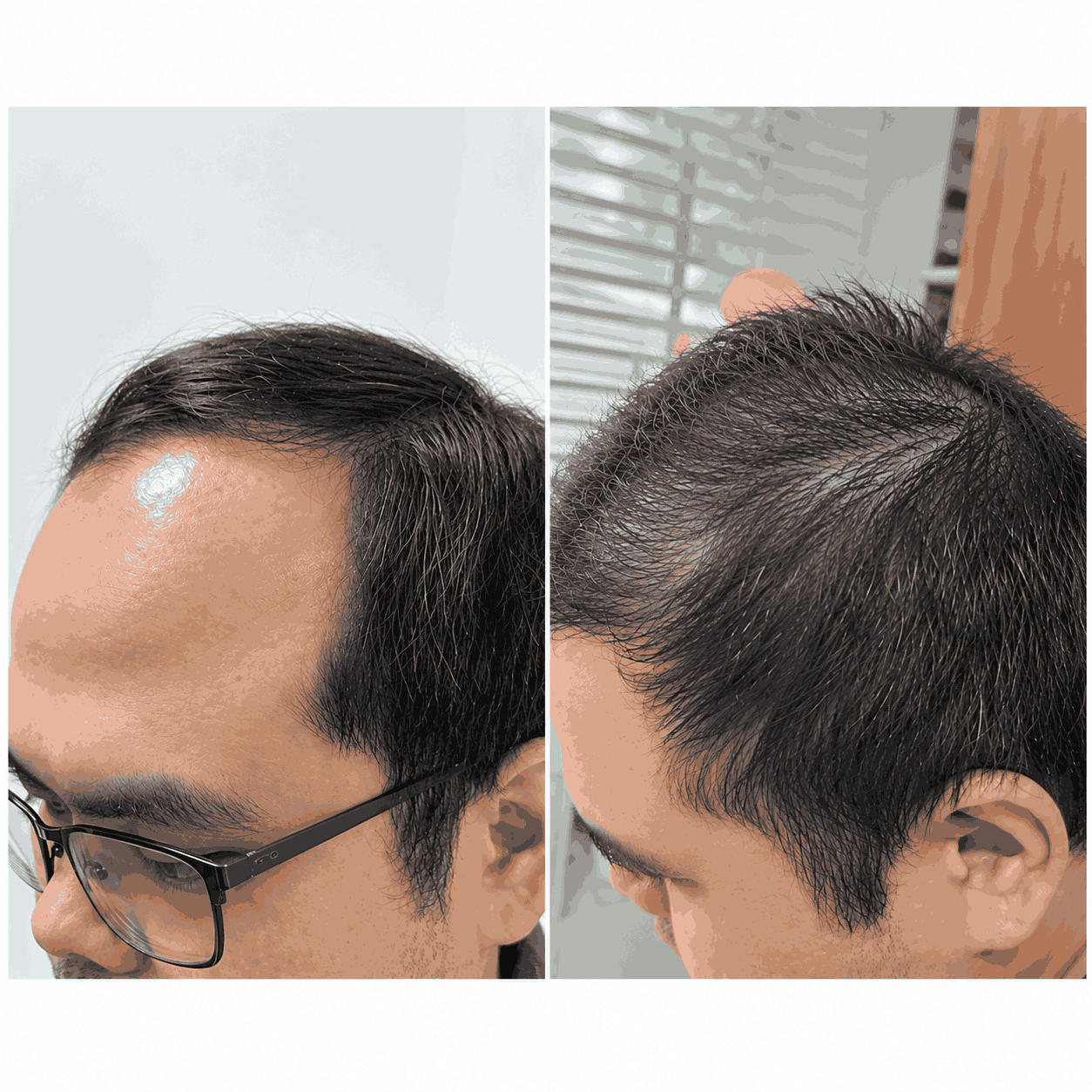
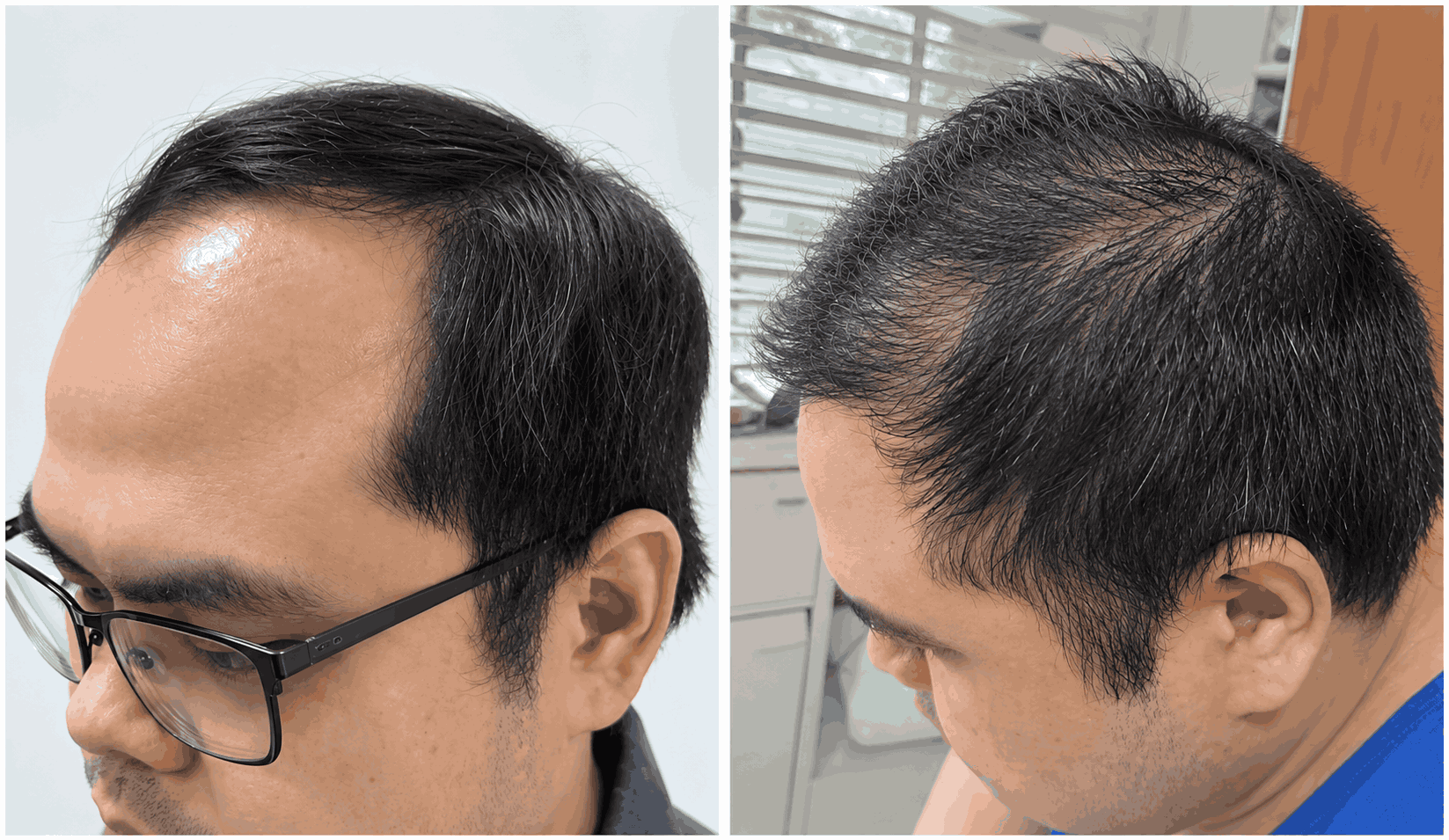
The shedding of the transplanted hair by the second month became an assurance that everything was going as expected. It has been discussed and explained to him and his parents in detail. On the third month, he started noticing the changes. By the fifth month, he was already being complemented.
For JP, these moments meant more than simply seeing new hair. They stood as proof that his decision and the patience he had poured into his recovery were finally paying off.
It became easier to enjoy the activities that used to make him feel awkward. The self-consciousness during photo ops and the anxiety about how others see him started to fade away.
Most importantly, he felt happier knowing that the procedure had worked for him.
The result was visible in more than just his hair. It was reflected in the freedom to socialize with greater confidence, enjoy time with others, and feel more comfortable in his own skin.
Looking back on his journey, JP realized that taking care of himself meant more than just addressing a physical concern. It also meant acknowledging how something affected his well-being and mustering the courage to explore possible solutions.
He considers himself blessed to have the support of his parents and doctors he trusts from the preparation to recovery.
This experience taught him that investing in oneself is an important part in caring for one's overall well-being. Having spent years feeling overly conscious of his appearance, deciding on a hair transplant was a meaningful step toward feeling better about himself.
And for those who may be experiencing the same struggle, JP has a message of encouragement:
“If something has been bothering you to an unhealthy degree, it is worth investing in yourself,” he shared.
While results may vary from person to person, undergoing hair transplant requires commitment to both the surgical procedure and the essential aftercare routine.
His advice is simple: explore your options, seek guidance from trusted medical professionals, and understand what the journey would involve before making a decision.
JP’s story is a reminder that hair loss can affect people in deeply personal ways, regardless of age. Behind every concern about thinning hair may be years of self-consciousness, missed moments of ease, and the quiet wish to feel confident again.
His hair restoration journey did not happen overnight. It took a firm decision, the guidance of trusted doctors, the support of his family, and months of patience.
Today, the cap that once felt a part of him is no longer something he needs to wear just to feel comfortable.
Perhaps, that is the most meaningful change of all: the freedom to step out, enjoy life, and feel more at ease with himself.
For JP, restoring his hair was more than just a physical transformation. It was a personal investment in his confidence, happiness, and well-being—a reminder that taking the first step towards change can open the door to a more fulfilling chapter in life.
Afterall, the journey to feeling like yourself again may begin with the courage to invest in yourself.
For more information about Hair Transplant and other Hair Restoration options, read our related article below.


